
14 Feb 2008
I think I was in middle school the when I took a test to find out my Myers-Briggs personality type. It’s the sort of thing they made people do to figure out what career they were best suited for. Hell if I can remember what I tested as, although I can say with confidence that it started with an “Introversion.” Well, a lot of time has passed since then, and we have this whole internet thing, so thankfully you can go take a Myers-Briggs approximation online in no time.
This time around I tested as an INTJ. I can’t compare that to my younger self, but my guess is that I haven’t changed much. Certainly the Judging/Perceiving dichotomy is the most loaded of the four pairs, as that I doubt few people would rather be designated as “judging.” But apparently it refers to your preference for structure, which I’ll concede that my neuroses require. I think I might have fallen more on the open ended “P” side when I was younger, but I’ve probably benefitted from the slip (at least professionally). But I wonder if there’s a natural personality progression here. Kind of like becoming set in your ways, which for me is the most terrifying aspect of Becoming Old.
Of the four temperaments I’m placed with the Rationals, which apparently are in short supply (6%). That means that 94% of the people out there are irrational, right? Well, at least the description seems to match me pretty well. I do oppose to my specific designation of Mastermind, which of course implies that I should live in an underground lair somewhere. In general I’m in the same bucket as a bunch of boring scientists, but I do take comfort that I have the company of both Hannibal Lector and Gandalf the Grey.
13 Feb 2008
After my first foray into zombie board gaming, of course I was excited to try out Zombies!!!, another entry into the genre. Unfortunately I walked away with a decidedly mixed experience.
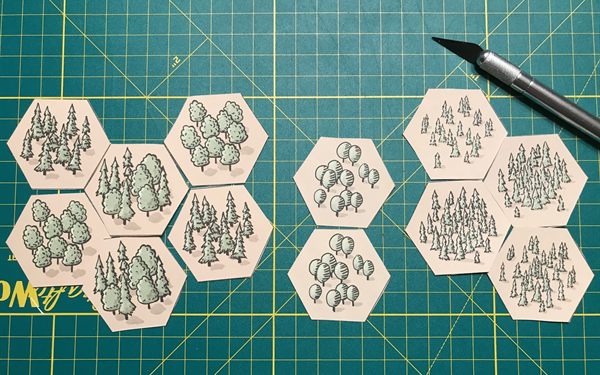
In Zombies!!! the objective is to be the first player to make it to the helipad and escape the zombie infested city. The players don’t have any direct conflict, but they are competing over the same resources. The city layout is completely random every play, with the helipad not being placed until late in the game. In the end it boils down to a race, except with mobs of zombies between you and the goal. And due to the randomized layout you don’t actually know where the finish line is going to be. Which unfortunately means that you don’t really have anything to do until the helipad comes into play.
To combat the lack of something to do in the beginning of the game, there is an alternate victory condition for killing 25 zombies. The problem is that killing zombies without dying is hard. Combat is resolved by rolling a die, where you can use ammo counters to increase your roll or a life counter to re-roll. Statistically you’re going to need to cough some of those up every other fight, and you potentially could blow through all of them on one zombie. If you die your zombie kill count is halved, making it very difficult to amass the required 25 zombies (especially because all the other players will gang up on you if you get anywhere close). The only way you can refill your ammo and life counters is to venture inside buildings, which always come infested with a host of zombies. The risk vs. reward is dubious unless you’ve got some sort of edge to tilt the extreme randomness in your favor. But even if luck is on your side, combat fundamentally isn’t very satisfying.
You get a hand of cards to add some strategy. In general the cards seem to lean more towards inhibiting other players than helping you out directly. Almost all of the weapon cards require that they be played in specific buildings, which results in them very rarely being played. So you end up filling your hand with smack-down cards in a hope to win by being the last man standing. There’s a limit to the mayhem you can unleash, as that you are only allowed to play one card per round. So what really seems to happen is that everyone saves up some uber cards until the endgame, where chaos erupts on the mad dash to the helipad.
If there’s one thing this game does well, it’s creating the feeling that there are a crap-ton of zombies swarming the city. The moments after the helipad is placed when everyone is scheming about that last rush are truly great. I like the theme, I like a lot of the ideas, but this game seems broken without some significant gameplay changes (which are hard to make confidently without playing lots of games). Thankfully the issues are well documented and there’s a good set of alternate rules available. But I’m a little shocked that the second edition release of this game hadn’t fixed more issues out of the box.
My first night of Zombies!!! Was disappointing. The second time, with more players and alternate rules, was much more satisfying. I’ll happily play it again, but it’s clear that the game has some fundamental issues that’ll prevent it from being a favorite.
08 Feb 2008
Played on PC
I’ve been struggling to figure out how I feel about the MMO genre. I love the epic worlds and character persistence, but I hate so many of the game mechanics that slow enjoyment to a crawl. I definitely have the capacity to enjoy these kinds of games, but the concentration of good stuff is extremely diluted. I feel like I’m in denial about a failing relationship because once in awhile we connect and I forget about all the arguing and apathy.
I’ve learned to trust Rock Paper Shotgun over the months. The blog is well written, unapologetically subjective, and written by people who get me as a gamer. So when they started talking about Tabula Rasa, a rare combination of MMORPG and FPS, they had my full attention. Richard Garriott may come off as a nut job, but he created one of my favorite games of all time. So I pushed aside my MMO fatigue and plopped down $40 for Richard Garriott’s Tabula Rasa.
And hot damn, this game is actually good.
Like most games, MMORPGs are basically about killing stuff. Surprisingly, killing stuff in Tabula Rasa is fun. Not fun in the typical MMO sense where after you kill lots of things you get a pat on the back and a minor statistical gain which appeals to your obsessive emotionally crippled self… which confuses it with fun. No, this game is fun for reals. In the same time it would take you to down some boar in another MMORPG you’ve rushed a squad of enemies, taken down their shield drone, shotgunned them onto their backs, and mercilessly clubbed them with the butt of your gun. Similar to how Puzzle Quest replaced the drab turn-based RPG mechanic with something more engaging, Tabula Rasa has replaced the drab real-time RPG mechanic with action packed goodness.
The whole game feels an MMO in fast forward. Many of the time consuming standards have been streamlined. Travel from zone to zone in Tabula Rasa is free and instantaneous. If you want to explore all eight of the game’s classes you won’t have to play the game eight times, thanks to the cloning system. And each run through is going to take less time, because twinking your alts (clones) is actually a supported process with shared storage between characters. Questing is streamlined, with mission goals clearly indicated on your map (sorry Raph, figuring out where you need to go is not the fun part). Hell, you don’t even have to take the time to click to loot, as that looting is accomplished by merely walking near your defeated foe. Pretty much all that filler crap has been thrown out the window.
One of the largest wastes of time in MMOs is looking for a group of people to play with. Extreme level/gear banding splits up the population up so that not everyone can play together. To make things more difficult, you’re going to need a specific number and specialization balance in your party in order to be successful. To find a viable group you have to wait around until the right people all magically materialize at the same time, which can take hours. Your only other option is to join a hardcore guild with a regular play schedule, which of course comes at the expense of your real social schedule flexibility. For a genre that’s supposed to be about multiplayer gaming, it sure is frustrating matching up with other people.
Tabula Rasa somewhat addresses this problem by automatically scaling the difficulty of instances to party size. Even if you can only find one other person to play with, the two of you can happily duo the encounter and still have a good time. In fact, the entire game can be played solo. Grouping is fun, and increases your overall survivability, but it’s not forced upon you. Which works well with my preferred play style, which is essentially “singleplayer with the option to become multiplayer at any time.”
There’s this concept in MMOs of “pulling,” which is the act of choosing an opponent from a field of many to engage in single combat. It’s a miniature puzzle to figure out how to attract the right combatants without adding others. You can pull aggressively, but given that the penalty (death) is high, your success is generally tied to your ability to balance risk. That’s right, MMOs are essentially risk management simulators. Well, Tabula Rasa makes managing risk very difficult, because there generally aren’t fields of baddies milling about. It’s quite common for a drop ship to plop down enemy reinforcements in the middle of your carefully planned assault. Pretty soon you realize it’s better to throw caution to the wind, spin up your chaingun, and have fun. Embrace unpredictability. The game actually rewards recklessness, giving you an experience bonus if you keep up a steady combo of kills.
As I read what I’ve written, this article could also easily be titled “Everything I hate about MMOs and why Tabula Rasa is different.” It’s because of this that I’m so forgiving of Tabula Rasa’s flaws. It replaces the typical fantasy fare with a sci-fi setting, which is refreshing, but the details of this world are forgettable and generic. Everything from the character design to the architecture to the landscape you’ve seen done better elsewhere. And it doesn’t do a good job of easing you into the world. There’s a decent intro tutorial, but after that you have to figure out everything for yourself. In particular the crafting system is a completely mystery until you do some online research, and then you realize that it has potential but is severely crippled by insufficient UI. Outside of the core combat, a lot of things about Tabula Rasa are rough around the edges.
For me, two main things are critical for a game to be enjoyable: gameplay (basic mechanics and incentive) and setting (into which I’m lumping story, characters, and environment). Good games create a synergy between those, which is essentially the connection between intellect and emotion. Tabula Rasa is thoroughly mediocre when it comes to setting, which I suspect will limit its long-term appeal. But it totally reinvigorates the genre’s archaic gameplay. Which is a very exciting thing, because gameplay, unlike setting, is transferable. If the MMO developers out there start taking notes from Tabula Rasa we’ll have a much brighter online gaming future ahead of us.